Comment by jasoneckert
5 months ago
SGI hardware was the sexiest hardware of the 1990s, and IRIX was the sexiest UNIX OS of the same period. They were the desire of nearly every UNIX nerd back then.
Remember "Erwin", the SGI O2 in the userfriendly.org comic? https://photos1.blogger.com/blogger/1065/737/1600/user%20fri...

The comic is now dead, but it had a long and amazing run.
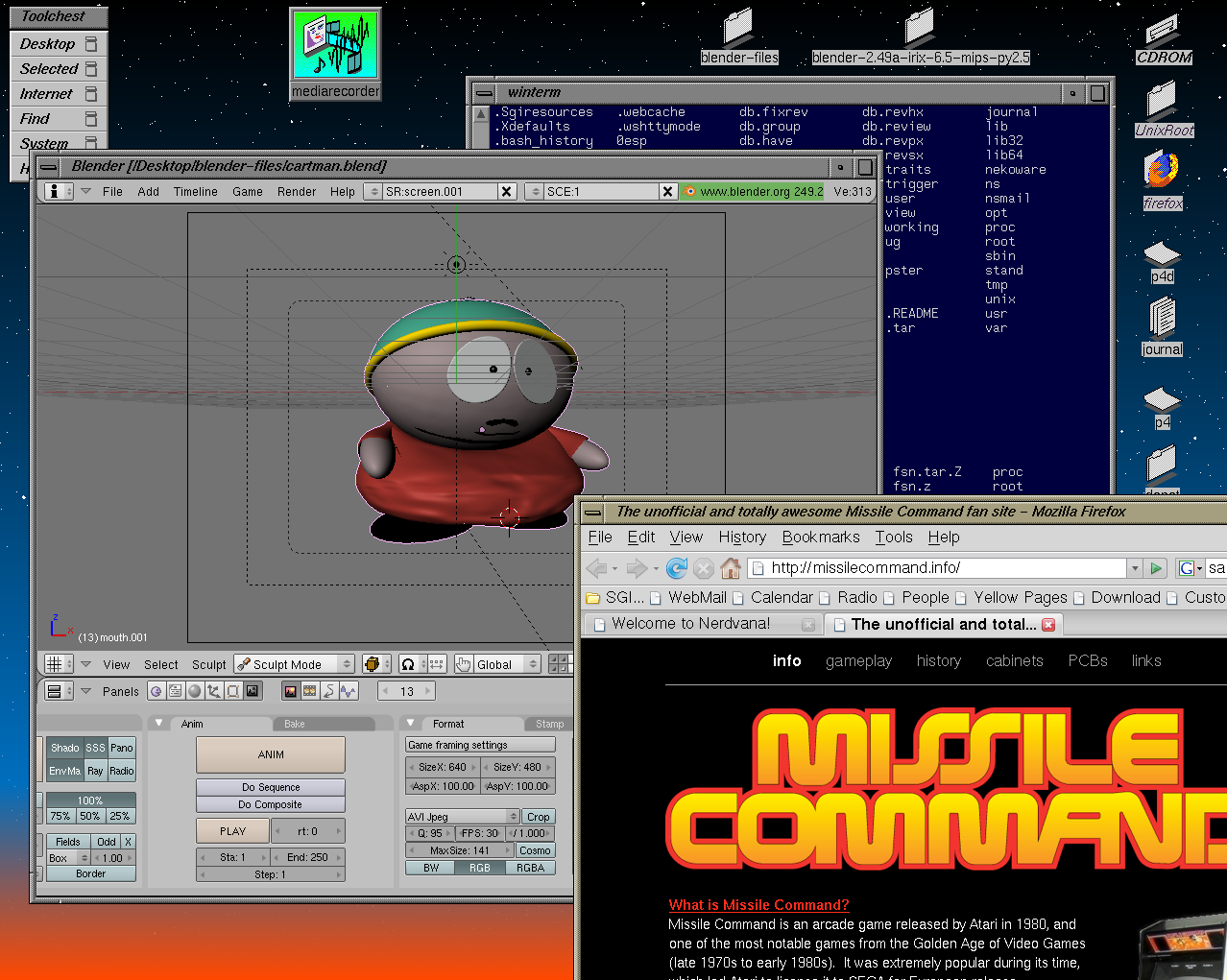
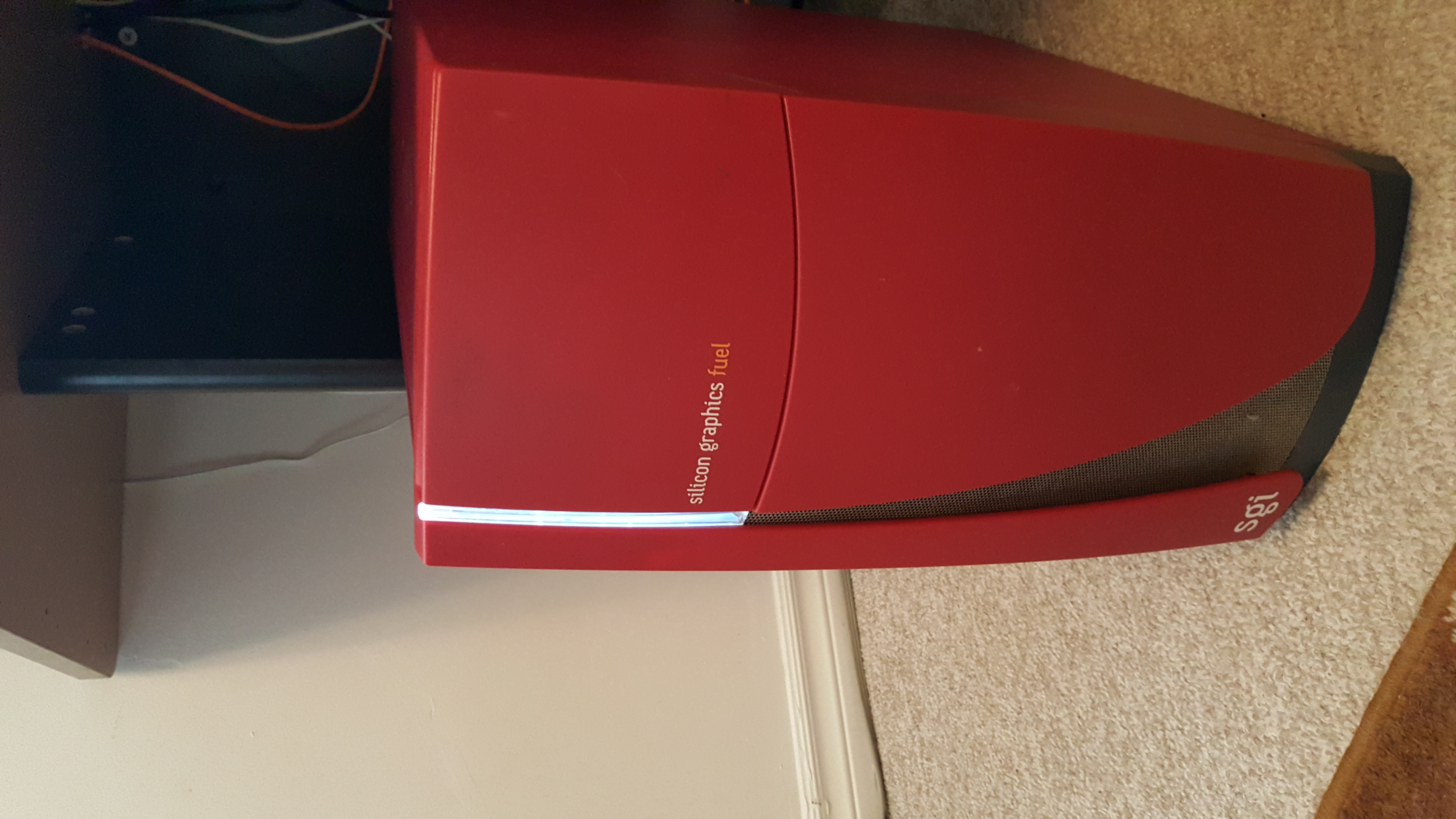
I still keep an SGI O2, Octane, and Fuel around for nostalgia hits nowadays, and they never disappoint:
https://triosdevelopers.com/jason.eckert/trios/SGI_Fuel_Blen...
I credit a lab full of SGIs at Ohio State with my transition from a career in mechanical engineering towards technology and information security. I just got transfixed by all of the things I could do and would spend my time in class distributing povray renders across the whole lab instead of paying attention to what I was supposed to be doing.
We also had a gorgeous lab of NeXT computers in a basement computer lab. Between just doing what seemed like magic in Mathematica and seeing how small I could make fonts on the laser printer, I also got scolded directly by Steve Jobs by replying to his default email in the mail client with 'read receipt' enabled. He said it was a violation of his privacy lol.
Edit: This was the email - https://blog.hayman.net/2025/05/06/from-steve-jobs-great-ide...
I too have an O2 along with some SGI flat panel screens, which was amazing tech in the world of CRT displays of yesteryear.
I've been trying to donate this stuff to local museums for a while but sadly, none seem interested. The O2 still boots without any issues, and at least one of the screens work. Shame to just throw away.
Craigslist or fb marketplace for $200 and it will be gone. Don't make it free. Compromise to $100 for the right buyer.
I'm probably just nostalgic, but to me this hardware is a piece of history that's mostly forgotten or overlooked by anyone who wasn't working in IT at the time. That's why I've been trying to get museums to take it, because my hope would be they'd do something educational with the hardware. Alas, selling is indeed probably my only recourse if I don't want these things to end up on the heap (right away.)
1 reply →
> https://triosdevelopers.com/jason.eckert/trios/SGI_Fuel.jpg
Thanks for posting this; never seen that particular model before. It looks like one of those kitschy, pad-supplied coffee or soda makers. I find the urge, very prevalent from the mid-90s to the mid-Aughts, to entomb even professional-grade electronics in cases that look like cheap toys or other household appliances both bizarre and fascinating, analog to the 70s trend of styling (especially home) computing devices as faux-wooden furniture pieces, et cetera.
I think the irony of this is the MIPS processors weren't that good for very long at all. (Famously Toy Story was rendered on SparcStations, even if the animation was prepared on SGIs). The PA-RISC ones seemed to have the most staying power, but many people don't view HP 9000 as sexy in the way SGI was.
The PA-RISC processor are really cool - the C8900 has a 64MB external shared L2, and a 768KB I & D cache per core. That's more I & D cache than any modern processor I am aware of, and more last level cache than basically anything but an AMD X3D or the last 5-10 years of X86 server chips. It's much slower of course than any modern cache.
The older 8500 has an article available with a die shot: https://ardent-tool.com/CPU/docs/MPR/19971117/111505.pdf It's like 75% cache even back then. (Fast SRAM With Integrated CPU is extremely accurate, lol).
> The PA-RISC processor are really cool
I'm glad someone else thinks so!
There's a very interesting vid about the design of the ISA here https://www.youtube.com/watch?v=C53tGHzp1PI and I think it's pretty clear they learned from early MIPS/Sparc. It's a shame it got abandoned in the Itanium push.
The Alpha was also a performance king in that era, but tbh I don't have the same nostalgia for it, although clearly it was executed very well.
2 replies →
> 768KB I & D cache per core
PA-RISC has mostly always had large L1 caches ( that used to be off-chip), and usually no L2 cache.
I know this bit of trivia, but I don't know the technical reasons/trade-offs for it.
On the other side, turns out both Playstation (1) and Nintendo 64 did quite well for quite long.
PS2, as well. But games and game hardware tend to have very different CPU requirements than general purpose workstations.
The N64/PS1/PS2 (and others) weren’t exceptional for very long, if ever, in terms of CPU power. They relied on dedicated graphics hardware, low price, ease—of-use, a business model that allowed for selling the base hardware at a loss, and devs optimizing for a fixed platform to stay competitive for 5-10 years as PC hardware improved.
I seem to recall the CPU in the N64 was specced to be something like 75% of the performance of a Pentium 90 but for 20% of the price. The PS1 doesn't even have floating point. When the PS2 was released it felt like x86 was advancing faster than ever, so whatever impressive performance edge it had lasted for about five minutes.
In all cases it's hard to argue that MIPS devices were sold on the strength of their CPUs from the mid 90s onwards.
2 replies →
> I think the irony of this is the MIPS processors weren't that good for very long at all.
AFAIK SpecInt and SpecFp would like to politely dissagree. /s
Didn't PA-RISC lead MIPS, and everyone else, on those? When the already-obsolete machine being discussed in the OP was finally marketed in mid-1996, its int/fp socres of either 8/10 or 9/11 depending on the clock speed were not great compared to the available PA8000 workstations that scored 12 on SPECint95 and 17 on SPECfp95. People bought SGIs because there was some critical app they needed that was only available on IRIX, and they tolerated the bad CPU performance because they didn't have a choice.
Irix remains the best looking OS imo.
I too keep an O2 (actually more than one), Octane, and a Fuel around. Plus an Indy or two.
> SGI hardware was the sexiest hardware of the 1990s, and IRIX was the sexiest UNIX OS of the same period.
Back in the 90s my best friend's stepfather happened to be the top dog of SGI Benelux (Belgium / The Netherlands / Luxembourg) so... My best friend had an SGI Indy (Indy, not Indygo) at home.
After school we'd go back to his place and have fun with the Indy. That thing already had a webcam (in, what, 1993?).
I remember a 3D demo of oil pipelines, some crazy music video with little balls bouncing on top of sound waves and... the terminal. I learned my very first Un*x command on that thing.
One one hand we had Commodore Amiga and games nearly as good as the arcade and on the other hand we had the Indy.
We of course also had our mediocre beige PC with an even more mediocre OS: DOS and then Windows.
Thankfully a few years late Linux came out and saved us from mediocrity.