Comment by dokeeffe
3 days ago
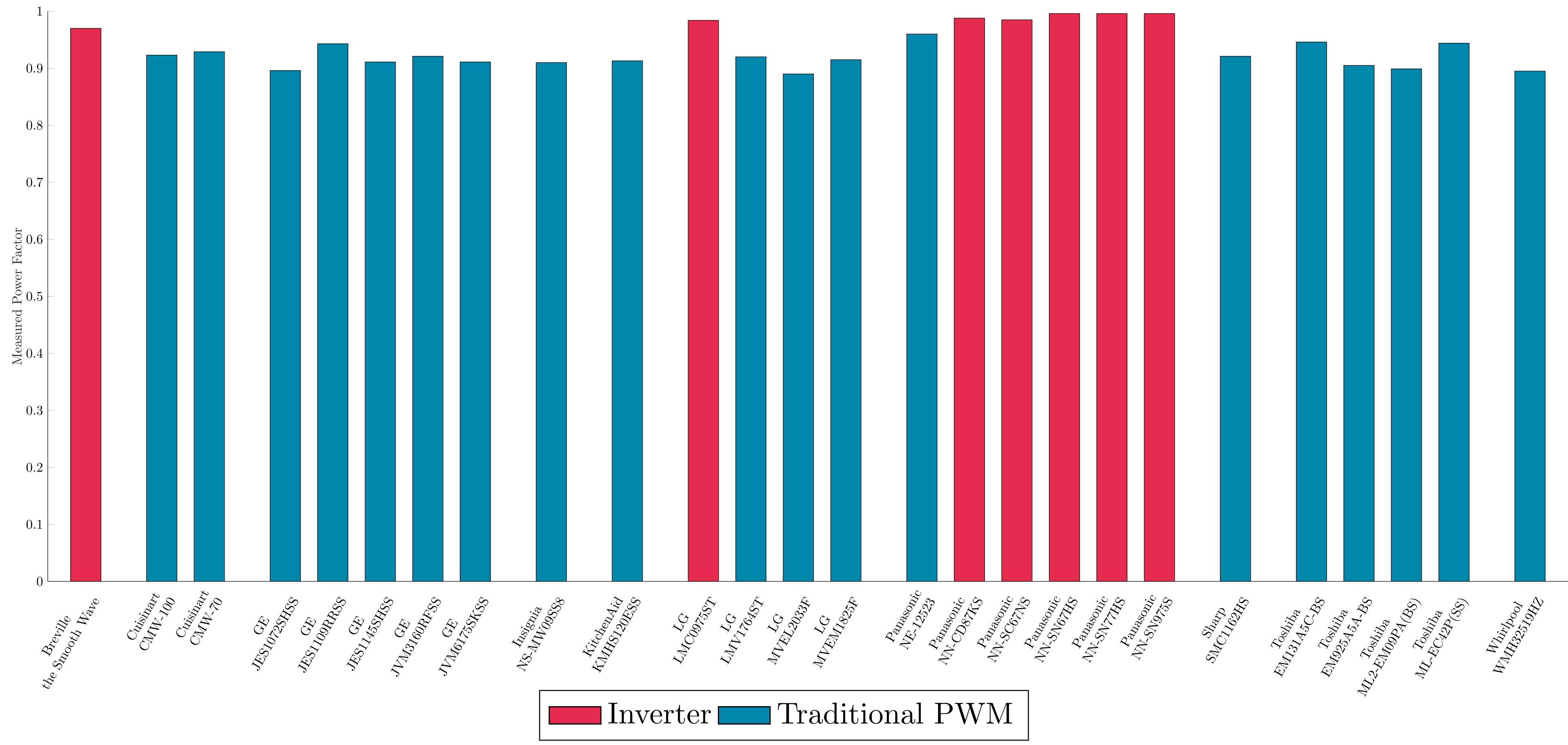
This is referring to active vs reactive power and the concept of power factor [1]. You're still paying for all the real energy consumed (including waste heat). Inverter microwaves tend to have a higher power factor than traditional models (measured data [2]). Residential electricity bills are based on active energy (kWh), not apparent power or reactive components, so a better power factor by itself doesn’t lower your bill. We’ll take a look at the article to clarify it.
[1] https://en.wikipedia.org/wiki/Power_factor [2] https://www.rtings.com/assets/pages/hRDTskis/power-factors-l...
Okay, this is a new concept for me so mind if I try explaining it to confirm I understand?
Inverter microwaves have an actual power consumption that more closely resembles what you see at the wall. Non-inverter microwaves will appear to draw more power from the wall than is actually delivered to food, but it doesn't matter that much, because that "extra" power is stored inductively in the magnetron, which gets returned to the grid when the microwave shuts off. There are some minor conversion losses from this, but not nearly as great as one might initially think looking at wall vs radiated power.
Is that correct?