Comment by Manuel_D
3 days ago
The piece doesn't seem to refute the key claims made by The Economist, namely that Gen-Z has higher inflation-adjusted incomes than previous generations. It's biggest criticism seems to be:
> The Economist piece and kindred articles are good examples of how to lie with statistics. You can show that the typical 25-year-old’s income outpaces boomers’ income when they were 25 only by failing to adjust for inflation and the rising costs of life’s necessities, or using averages rather than medians.
But the Economist did use inflation-adjusted median earnings in its analysis of incomes by age among different generations. The Economist cited the median after-tax income, adjusted for inflation. (https://www.economist.com/cdn-cgi/image/width=600,quality=10...) I'm not sure why this author seems to think that the Economist is failing to adjust for inflation or not using medians, when it says so quite clearly in their graphs.

The Prospect article also says that home ownership among under-35s has gone down, and links to data on the home ownership rates grouped by age (https://www.prb.org/wp-content/uploads/2020/02/a-02132020-ar...) but the data ends in 2017. The oldest of Gen-Z would only be 20 years old at the time this data ends. When we look at the Economist's wrote:
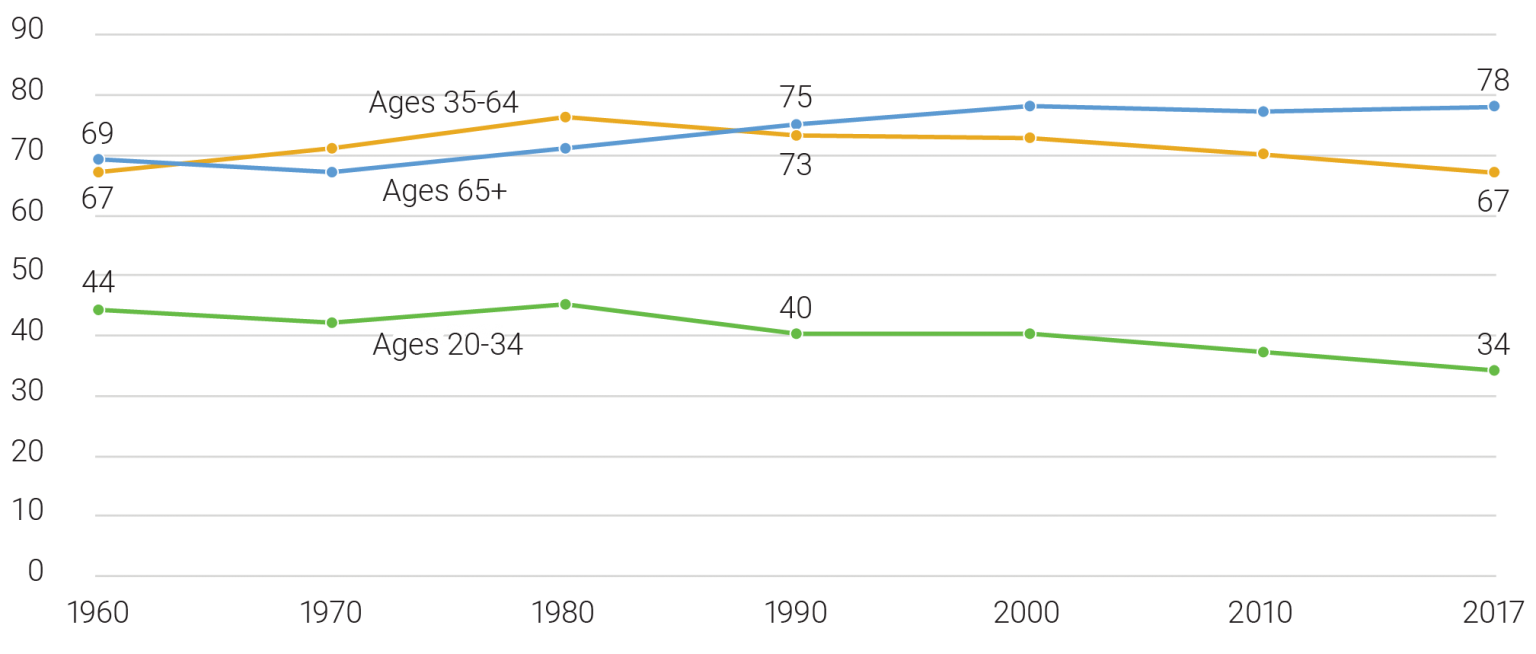
> Bolstered by high incomes, American Zoomers’ home-ownership rates are higher than millennials’ at the same age (even if they are lower than previous generations’).
A chart of home ownership rates that end in 2017 could not possibly refute this claim given that Gen-Z would be too young to buy homes around the time that the data's source ends. The home ownership rate among under-35s increased from 34% in 2017 to 39% in 2023 (https://www.census.gov/library/stories/2023/07/younger-house...), so when Gen-Z started to enter their earliest feasible home-buying years the ownership rate was in a period of recovery. The Economist's claims seem to bear out.
The rest of the piece goes off on tangents largely unrelated to the financial outcomes related to Gen-Z relative to previous generations. For instance, it cites a pew survey on the percentage of young adults that support their parents. But it does not compare that against earlier decades, so there's no evidence in any change in rate over time. In fact the bulk of the piece shares data that aren't relevant. E.g. how does the racial breakdown of the subprime mortgages relate to incomes by age and birth year?
No comments yet
Contribute on Hacker News ↗