Comment by dredmorbius
2 months ago
Centralised and long-distance commerce (and passenger travel) are all but wholly predicated on minuscule risks.
I draw parallels between the development of whales and large-scale shipping:
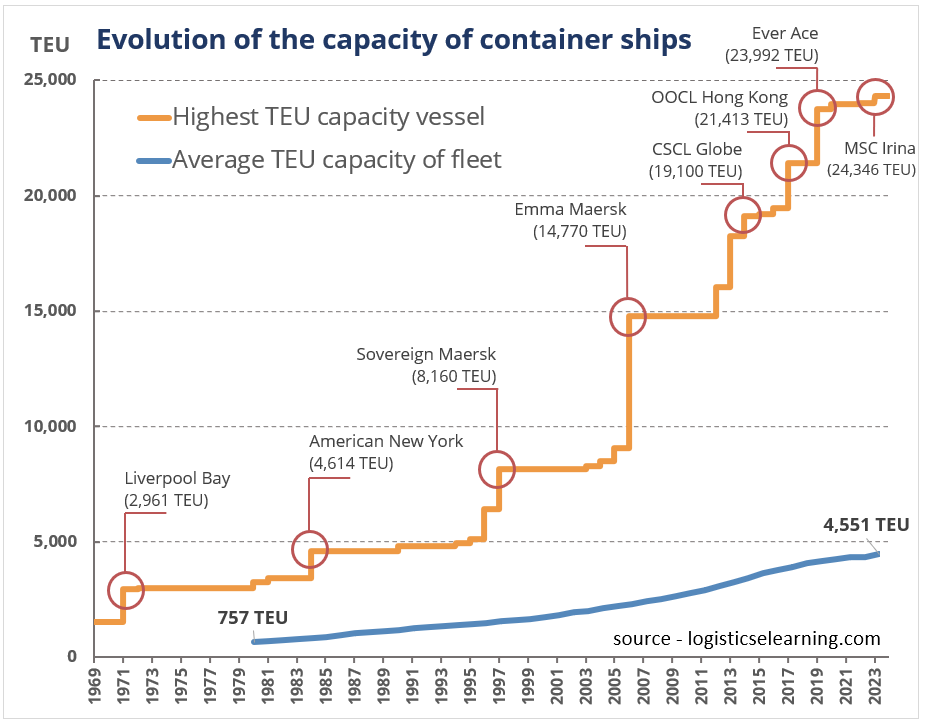
- Both are comparatively recent developments. Giant whales are less than 5 million years old, large cargo ships (tankers, dry bulk, containers) at what are now considered ordinary scales are less than three decades old. (See: <https://logisticselearning.com/largest-container-ships/> especially graphic here: <https://logisticselearning.com/wp-content/uploads/2024/06/im...>.)
- Both require highly-efficient propulsion: mammalian metabolism, petroleum-fueled diesel engines, respectively.
- Both require widely-separated resource opportunities. For whales, seasonally-abundant food such as krill or fish; for cargo, large-scale production and consumption of goods separated by water.
- Both require comparative safety from predators. Large adult whales have virtually no natural predators (orcas being a notable exception), until human whaling grew in scale largely since the 1500s and accelerating greatly through the 19th and 20th centuries, during which whole populations where annihilated. Maritime shipping depends on a lack of piracy or hostile naval warfare, with tremendous losses to traffic being seen during the 1st and 2nd World Wars in both the Atlantic and Pacific.
(There's a similar pattern with air travel, in which flights virtually instantly divert far from active combat zones. The list of airliner shoot-down incidents is surprisingly large: <https://en.wikipedia.org/wiki/List_of_airliner_shootdown_inc...>.)
Highly-centralised or choreographed logistics chains are also fragile and subject to disruption. During WWII, the Soviet Union was initially inclined to One Big Dump supply depots, possibly a hallmark of centralised planning. These proved attractive targets and quite harmful to ongoing operations, and over the course of the war much more decentralised patterns emerged, or so I dimly recall from long-ago reading. Decentralised operations are integral to much guerilla / asymmetric warfare by the inferior party.
No comments yet
Contribute on Hacker News ↗