Comment by jgord
3 hours ago
Many people are calling them circular, eg bloomberg, BIS :
https://www.youtube.com/watch?v=lwcM0By4aJQ
https://www.zerohedge.com/markets/bursting-ai-bubble-collaps...
diagram : https://cms.zerohedge.com/s3/files/inline-images/AI%20ecosys...
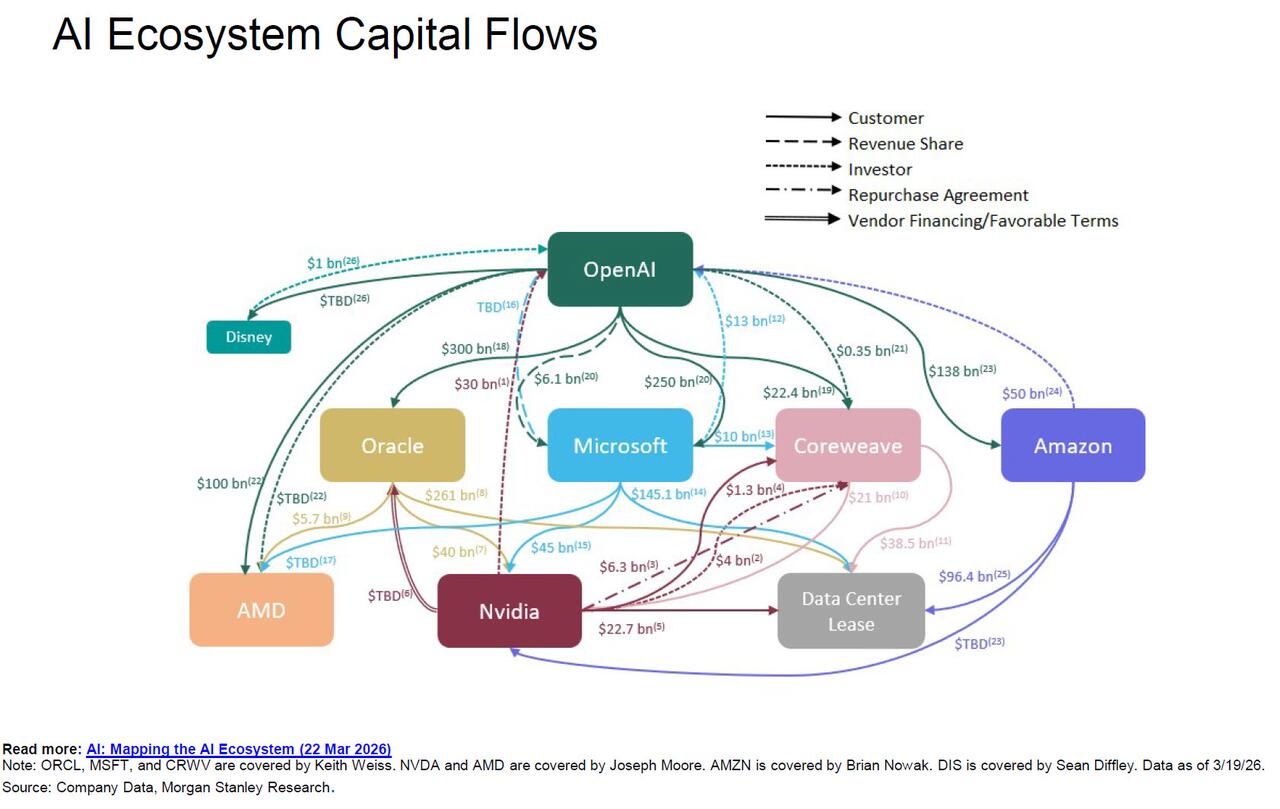
My point is, Id like to know how circular or not they are - clearly a lot of money is actually being spent on GPUs/datacenter build/electricity, Id like to know what fraction that is.
Two contradictory thoughts based on the article:
1. One thing you could do is look at free cashflow. The actual cash a company generates and keeps on its balance sheet would be a clear indicator of retaining profit or resources after circular deals.
2. The above doesn't preclude a company from committing to backstops and offtake agreements, so you still need to track those.
... so you'd want to look at how much cash a company is retaining and whether it is committing to act as a sort of lender of last resort.
Up until this week, I'd argue that Nvidia is was a pretty solid player in this space. If it's generating $10s of billions in cash, then who cares if it put $10 billion into a risky startup? It can afford it.
Now, however, it is also exploring committing $250 billion as a backstop for OpenAI's data center projects, which moves it to the riskier side of things.
I know I'm not providing you with data; I don't have that... But I think the above is a signpost to watch out for.