Comment by trifurcate
3 years ago
> "This page wants to send you notifications" or "this page wants to use the microphone" is understandable. "This page wants to read pixels from a canvas" isn't.
Yes, it is. Tor Browser already does this: https://www.bleepstatic.com/content/posts/2017/10/30/CanvasF...
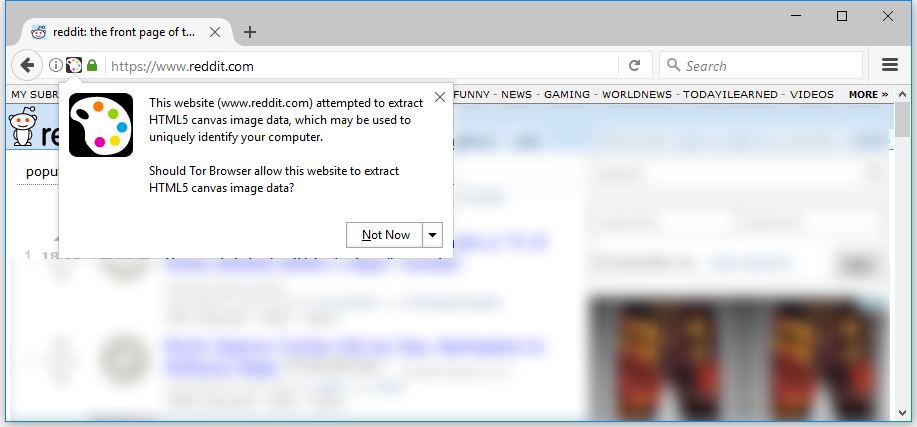
That specific wording may be a touch too verbose for the average end user, but it's not impossible nor is it strange. Just include a note about how this is 99% likely a fingerprinting measure; option b) isn't so bad in this case. Of course, due to the nature of how fingerprinting works, the absolute breadth of features that would be gated behind something like this would be offputting.
I am also wary of what you suggested with gating this kind of fingerprinting to when the website has positively identified the user anyway; in a way, this seems to me even more valuable than fingerprint data without an associated "strong" identity.
Giving users the permissions would simply be a training exercise in "I have to say 'yes' or TikTok breaks". Like how Android worked a few years ago with the other permissions.
Android largely works now with these permission prompts, though. TikTok asks you for a million permissions too, and many average end users decline. Many people also opt out of tracking on Facebook et al. when iOS prompts them about it.
If you don’t present the tracking prompt exactly how Apple wants you to they boot you from the store. The same is not true for a website.
> and many average end users decline
[citation needed]
1 reply →
The user ‘Joe average’ does not use Tor, does not even know it exists - Tor is used by a completely different segment (of people with ‘above average’ IT skills…)