Comment by hn_throwaway_99
3 years ago
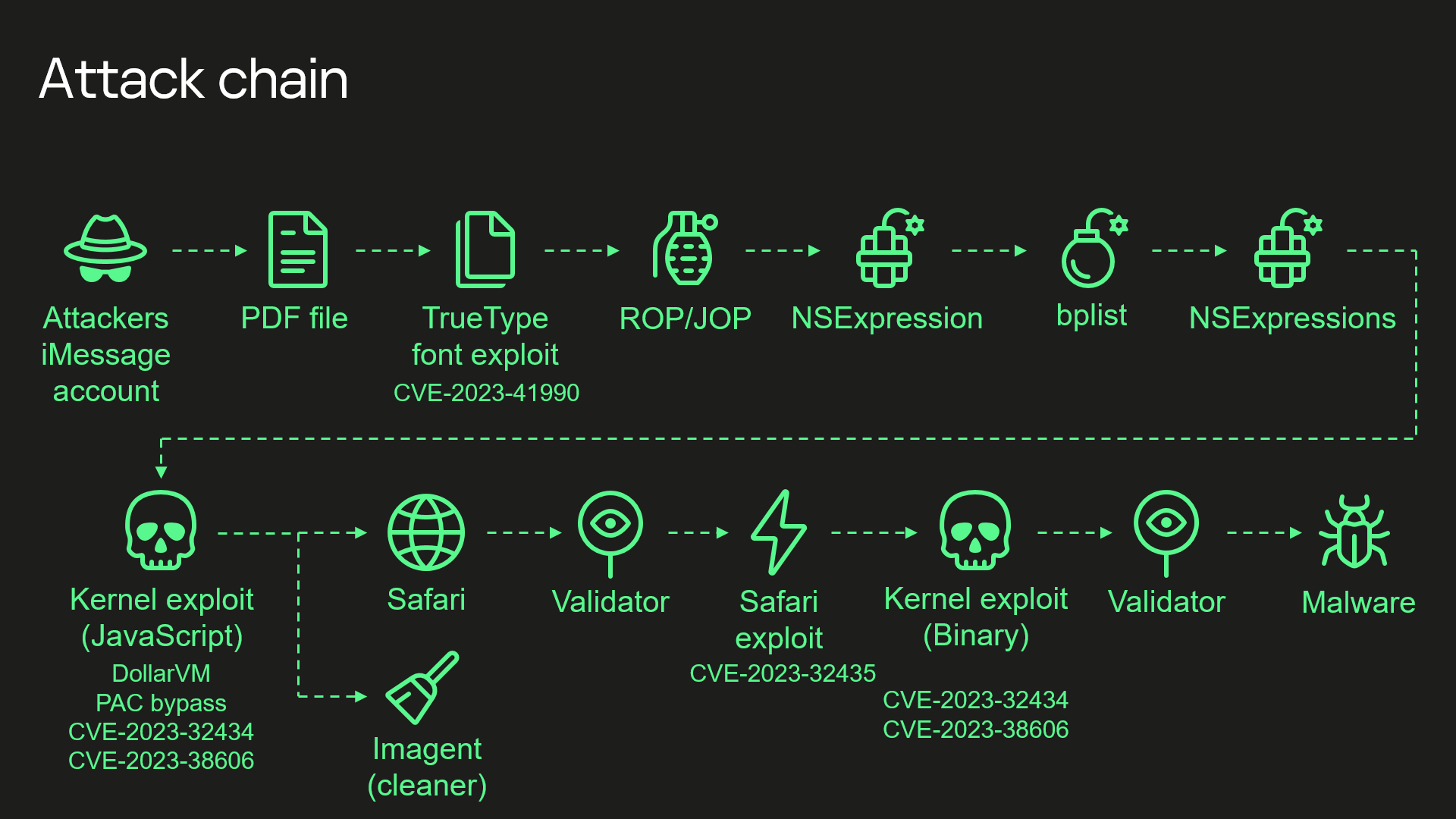
The Safari vulnerability wasn't necessary (the device was completely owned before that), and was really just a "nice to have" - it allowed verification of the targeted user and, presumably, customizable malware delivery. From the article, if you look at the bullet points under the Kaspersky diagram of the exploit chain:
> After exploiting all the vulnerabilities, the JavaScript exploit can do whatever it wants to the device and run spyware, but attackers chose to: a) launch the imagent process and inject a payload that cleans the exploitation artifacts from the device; b) run the Safari process in invisible mode and forward it to the web page with the next stage.
In other words, if looking at the diagram, https://cdn.arstechnica.net/wp-content/uploads/2023/12/trian... , it's completely "game over" once you get to the skull icon in the lower left corner, and the Safari exploit is after that.
No comments yet
Contribute on Hacker News ↗